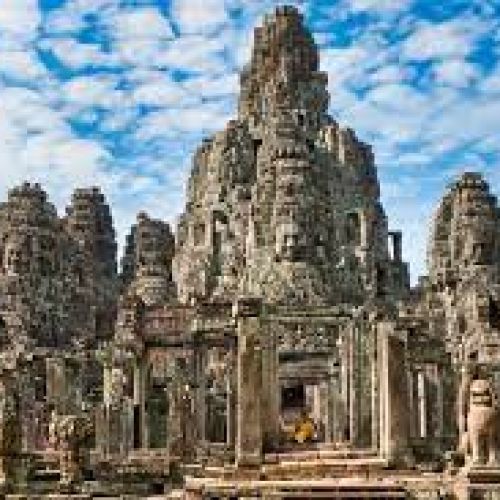
he Bayon was the last state temple to be built at Angkor (Khmer: ក្រុងអង្គរ), and the only Angkorian state temple to be built primarily to worship buddhist deities, though a great number of minor and local deities were also encompassed as representatives of the various districts and cities of the realm. Originally a buddhist temple, the Bayon(Jayagiri) was the centrepiece of Jayavarman VII's massive program of monumental construction and public works, which was also responsible for the walls and nāga-bridges of Angkor Thom (Khmer: អង្គរធំ) and the temples of Lord Vishnu (Khmer: ប្រាសាទព្រះខ័ន), Ta Prohm (Khmer: ប្រាសាទតាព្រហ្ម) and Banteay Kdei (Khmer: ប្រាសាទបន្ទាយក្តី).[7] From the vantage point of the temple's upper terrace, one is struck by "the serenity of the stone faces" occupying many towers.[6] The similarity of the 216 gigantic faces on the temple's towers to other statues of the has led many scholars to the conclusion that the faces are representations of Jayavarman VII, himself (Khmer: ព្រះបាទជ័យវរ្ម័នទី ៧). Scholars have theorized that the faces belong to the bodhisattva of compassion called Avalokitesvara or Lokesvara
























































 trip
trip
trip
trip
trip
trip
trip
trip
trip
trip
trip
trip
trip
trip
trip
trip
trip
trip
trip
trip
trip
trip
trip
trip
trip
trip
trip
trip
trip
trip
trip
trip
trip
trip
trip
trip
trip
trip
trip
trip
trip
trip
trip
trip
trip
trip
trip
trip
trip
trip
trip
trip
trip
trip
trip
trip
trip
trip
trip
trip
trip
trip
trip
trip
trip
trip
trip
trip
trip
trip
trip
trip
trip
trip
trip
trip
trip
trip
trip
trip
trip
trip
trip
trip
trip
trip
trip
trip
trip
trip
trip
trip
trip
trip
trip
trip
trip
trip
trip
trip
trip
trip
trip
trip
trip
trip
trip
trip
trip
trip
trip
trip
trip
trip
trip
trip
trip
trip
trip
trip
trip
trip
trip
trip
trip
trip
trip
trip
trip
trip
trip
trip
trip
trip
trip
trip
trip
trip
trip
trip
trip
trip
trip
trip
trip
trip
trip
trip
trip
trip
trip
trip
trip
trip
trip
trip
trip
trip
trip
trip
trip
trip
trip
trip
trip
trip
trip
trip
trip
trip
trip
trip
trip
trip
trip
trip
trip
trip
trip
trip
trip
trip
trip
trip
trip
trip
trip
trip
trip
trip
trip
trip
trip
trip
trip
trip
trip
trip
trip
trip
trip
trip
trip
trip
trip
trip
trip
trip
trip
trip
trip
trip
trip
trip
trip
trip
trip
trip
trip
trip
trip
trip
trip
trip
trip
trip
trip
trip
trip
trip
trip
trip
trip
trip
trip
trip
trip
trip
trip
trip
trip
trip
trip
trip
trip
trip
trip
trip
trip
trip
trip
trip
trip
trip
trip
trip
trip
trip
trip
trip
trip
trip
trip
trip
trip
trip
trip
trip
trip
trip
trip
trip
trip
trip
trip
trip
trip
trip
trip
trip
trip
trip
trip
trip
trip
trip
trip
trip
trip
trip
trip
trip
trip
trip
trip
trip
trip
trip
trip
trip
trip
trip
trip
trip
trip
trip
trip
trip
trip
trip
trip
trip
trip
trip
trip
trip
trip
trip
trip
trip
trip
trip
trip
trip
trip
trip
trip
trip
trip
trip
trip
trip
trip
trip
trip
trip
trip
trip
trip
trip
trip
trip
trip
trip
trip
trip
trip
trip
trip
trip
trip
trip
trip
trip

